
Contents
- 🌐 Introduction to Ray Tracing
- 🔍 History of Ray Tracing
- 📊 How Ray Tracing Works
- 🎮 Applications in Computer Graphics
- 👀 Real-Time Ray Tracing
- 🤔 Challenges and Limitations
- 📈 Future of Ray Tracing
- 👥 Key Players in Ray Tracing
- 📊 Performance Metrics
- 🔀 Hybrid Rendering Techniques
- 📚 Conclusion and Future Directions
- Frequently Asked Questions
- Related Topics
Overview
Ray tracing, a technique that simulates the way light behaves in the real world, has been a holy grail for computer graphics professionals since the 1960s. Pioneers like Turner Whitted and James Kajiya laid the groundwork for this technology, which has evolved significantly over the years. With the advent of powerful GPUs and dedicated hardware like NVIDIA's RTX series, real-time ray tracing has become a reality. According to a report by Jon Peddie Research, the global ray tracing market is expected to reach $14.3 billion by 2025, growing at a CAGR of 33.2%. However, the high computational requirements and limited support for ray tracing in existing software have sparked debates among developers and researchers. As the technology continues to advance, we can expect to see more widespread adoption in industries like gaming, film, and architecture, with potential applications in fields like scientific visualization and virtual reality.
🌐 Introduction to Ray Tracing
Ray tracing is a rendering technique used to generate high-quality, photorealistic images by simulating the way light behaves in the real world. It is a method for calculating the path of waves or particles through a system, and has been practiced in two distinct forms: Ray Tracing (Physics) and Ray Tracing (Graphics). The latter is used for 3D image generation and has become a crucial aspect of Computer Graphics. With the advancement of technology, ray tracing has become more accessible and is being used in various fields such as Video Games, Film Production, and Architecture. The use of ray tracing in these fields has enabled the creation of more realistic and immersive environments, as seen in Unreal Engine and Unity.
🔍 History of Ray Tracing
The history of ray tracing dates back to the 1960s, when it was first used in Optics to analyze optical systems. The concept of ray tracing was later applied to Computer Science in the 1970s, where it was used to generate 3D images. The first ray tracing algorithm was developed by Turner Whitted in 1980, which paved the way for the development of more advanced algorithms. Since then, ray tracing has become a widely used technique in Computer Graphics, with applications in Video Games, Film Production, and Architecture. The evolution of ray tracing has been influenced by the work of James Kajiya and Patrick Hanrahan.
📊 How Ray Tracing Works
Ray tracing works by simulating the way light behaves in the real world. It takes into account the Physics of light, including reflection, refraction, and absorption. The algorithm used in ray tracing is based on the concept of Ray Casting, where virtual rays are cast from the camera into the scene. The rays then intersect with objects in the scene, and the resulting color and intensity of the rays are calculated based on the Materials and Lighting of the objects. This process is repeated for multiple rays, resulting in a high-quality, photorealistic image. The use of Global Illumination and Ambient Occlusion techniques can further enhance the realism of the image, as seen in Blender and Maya.
🎮 Applications in Computer Graphics
Ray tracing has numerous applications in Computer Graphics, including Video Games, Film Production, and Architecture. In video games, ray tracing is used to create more realistic and immersive environments, such as in Cyberpunk 2077 and Call of Duty. In film production, ray tracing is used to create photorealistic special effects, such as in Star Wars and Avengers. In architecture, ray tracing is used to create realistic visualizations of buildings and spaces, such as in Autodesk and SketchUp. The use of ray tracing in these fields has enabled the creation of more realistic and engaging experiences, as seen in Oculus Rift and HTC Vive.
👀 Real-Time Ray Tracing
Real-time ray tracing is a technique that allows for the rendering of high-quality, photorealistic images in real-time. This is achieved through the use of advanced Hardware and Software technologies, such as NVIDIA's Turing Architecture and AMD's RDNA Architecture. Real-time ray tracing has numerous applications in Video Games, Virtual Reality, and Augmented Reality. The use of real-time ray tracing in these fields has enabled the creation of more immersive and engaging experiences, as seen in Fortnite and PlayerUnknown's Battlegrounds.
🤔 Challenges and Limitations
Despite its numerous applications, ray tracing also has several challenges and limitations. One of the main challenges is the high computational cost of ray tracing, which can result in slow rendering times. Another challenge is the complexity of the algorithm, which can make it difficult to implement and optimize. Additionally, ray tracing requires a significant amount of Memory and Processing Power, which can be a limitation for lower-end hardware. However, researchers and developers are working to overcome these challenges, such as through the use of Machine Learning and Deep Learning techniques, as seen in TensorFlow and PyTorch.
📈 Future of Ray Tracing
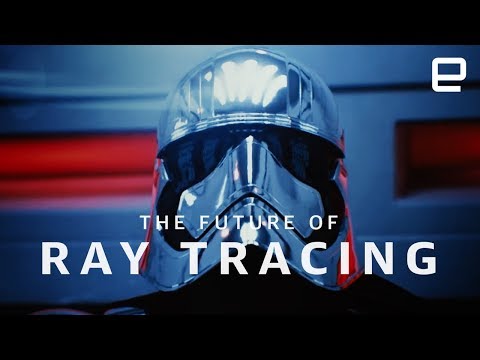
The future of ray tracing is promising, with numerous advancements and innovations on the horizon. One of the most significant developments is the integration of ray tracing into Game Engines, such as Unreal Engine and Unity. This will enable developers to create more realistic and immersive games and experiences. Another development is the use of Artificial Intelligence and Machine Learning to accelerate ray tracing and improve its performance. The use of Cloud Computing and Distributed Rendering can also further enhance the performance and accessibility of ray tracing, as seen in Google Cloud and Amazon Web Services.
👥 Key Players in Ray Tracing
Several key players are involved in the development and advancement of ray tracing, including NVIDIA, AMD, and Intel. These companies are working to develop new hardware and software technologies that can accelerate and improve the performance of ray tracing. Additionally, numerous research institutions and universities are also involved in the development of ray tracing, such as Stanford University and Massachusetts Institute of Technology. The work of these institutions and companies has enabled the creation of more realistic and immersive experiences, as seen in Minecraft and Roblox.
📊 Performance Metrics
The performance of ray tracing is typically measured using metrics such as Frames Per Second (FPS) and Rendering Time. These metrics can provide insight into the efficiency and effectiveness of the ray tracing algorithm and the hardware used to render the images. Additionally, metrics such as Image Quality and Visual Fidelity can also be used to evaluate the performance of ray tracing. The use of Benchmarking tools, such as 3DMark and Unigine, can further help to evaluate and compare the performance of different ray tracing implementations, as seen in GPU Benchmark and CPU Benchmark.
🔀 Hybrid Rendering Techniques
Hybrid rendering techniques combine ray tracing with other rendering techniques, such as Rasterization and Path Tracing. These techniques can provide a balance between image quality and performance, and are often used in applications where real-time rendering is required. Hybrid rendering techniques can also be used to accelerate ray tracing, by using rasterization to render certain parts of the scene and ray tracing to render other parts. The use of Multi-Resolution Rendering and Level of Detail techniques can further enhance the performance and quality of hybrid rendering, as seen in CryEngine and Source Engine.
📚 Conclusion and Future Directions
In conclusion, ray tracing is a powerful rendering technique that has numerous applications in Computer Graphics. Its ability to simulate the way light behaves in the real world makes it an essential tool for creating photorealistic images and immersive experiences. As technology continues to advance, we can expect to see even more innovative and exciting applications of ray tracing in the future. The future of ray tracing is promising, with numerous advancements and innovations on the horizon, such as the integration of Ray Tracing into Game Engines and the use of Artificial Intelligence and Machine Learning to accelerate ray tracing.
Key Facts
- Year
- 1967
- Origin
- University of Utah, USA
- Category
- Computer Graphics
- Type
- Technology
Frequently Asked Questions
What is ray tracing?
Ray tracing is a rendering technique used to generate high-quality, photorealistic images by simulating the way light behaves in the real world. It is a method for calculating the path of waves or particles through a system, and has been practiced in two distinct forms: Ray Tracing (Physics) and Ray Tracing (Graphics). The latter is used for 3D image generation and has become a crucial aspect of Computer Graphics.
How does ray tracing work?
Ray tracing works by simulating the way light behaves in the real world. It takes into account the Physics of light, including reflection, refraction, and absorption. The algorithm used in ray tracing is based on the concept of Ray Casting, where virtual rays are cast from the camera into the scene. The rays then intersect with objects in the scene, and the resulting color and intensity of the rays are calculated based on the Materials and Lighting of the objects.
What are the applications of ray tracing?
Ray tracing has numerous applications in Computer Graphics, including Video Games, Film Production, and Architecture. In video games, ray tracing is used to create more realistic and immersive environments, such as in Cyberpunk 2077 and Call of Duty. In film production, ray tracing is used to create photorealistic special effects, such as in Star Wars and Avengers.
What are the challenges and limitations of ray tracing?
Despite its numerous applications, ray tracing also has several challenges and limitations. One of the main challenges is the high computational cost of ray tracing, which can result in slow rendering times. Another challenge is the complexity of the algorithm, which can make it difficult to implement and optimize. Additionally, ray tracing requires a significant amount of Memory and Processing Power, which can be a limitation for lower-end hardware.
What is the future of ray tracing?
The future of ray tracing is promising, with numerous advancements and innovations on the horizon. One of the most significant developments is the integration of ray tracing into Game Engines, such as Unreal Engine and Unity. This will enable developers to create more realistic and immersive games and experiences. Another development is the use of Artificial Intelligence and Machine Learning to accelerate ray tracing and improve its performance.
How is ray tracing used in virtual reality?
Ray tracing is used in Virtual Reality to create more realistic and immersive environments. It is used to simulate the way light behaves in the real world, and to create photorealistic images and scenes. The use of ray tracing in virtual reality enables the creation of more engaging and interactive experiences, such as in Oculus Rift and HTC Vive.
What is hybrid rendering?
Hybrid rendering is a technique that combines ray tracing with other rendering techniques, such as Rasterization and Path Tracing. These techniques can provide a balance between image quality and performance, and are often used in applications where real-time rendering is required. Hybrid rendering techniques can also be used to accelerate ray tracing, by using rasterization to render certain parts of the scene and ray tracing to render other parts.